
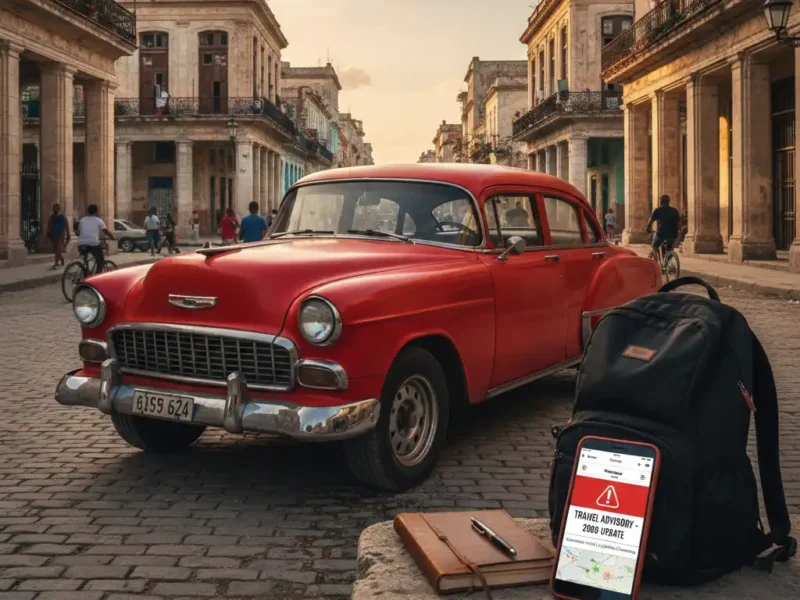
If you are thinking about traveling to Cuba in 2026 and wondering if it is a safe destination for American tourists, the short answer is: yes, but it is not an easy trip and it’s not for everyone. Cuba remains one of the safest countries in the Caribbean in terms of violent crime, but the current experience is marked by a deep crisis that completely changes what it means to “travel safely.”
In other words: the greatest risk in Cuba today is usually not violence, but everything else.
The Big Picture: What’s Really Going On in Cuba in 2026
Cuba is going through a prolonged economic, social, and political crisis. International sanctions, the decline in tourism after the pandemic, and structural problems have led to constant shortages of fuel, food, and medicine, especially outside of Havana and the main tourist hubs.
This directly affects the traveler. As of today, traveling to Cuba is a much more rustic than refined experience. It is not uncommon to encounter blackouts, long waits to eat or get around, and constant changes in the availability of basic services. Even “all-inclusive” hotels have difficulties maintaining stable standards for food, drink, or drinking water.
That is why, although governments like those of the United States, Canada, and the United Kingdom maintain Level 2 travel advisories (Exercise Increased Caution), the reason is not a wave of violent crime, but rather instability and daily logistical challenges.
Is Cuba Dangerous? Crime vs. Reality for Tourists
One of the biggest confusions when talking about safety in Cuba is mixing violent crime with everyday problems stemming from the crisis.
In strict terms, Cuba is not a dangerous country for tourists when compared to other destinations in Latin America or even some US cities. Violent crimes against visitors remain infrequent.
What has increased notably are petty crimes:
- Pickpocketing in very crowded areas
- Currency exchange scams
- Scams specifically targeting tourists
- New forms of digital fraud, such as fake Wi-Fi networks
In areas like Old Havana, Vedado, or the Malecon, it is wise to be more alert than usual. Not because these are unsafe places in themselves, but because economic desperation has led more people to try to “make a living” at the expense of the distracted visitor.
Daily Life Risks: Shortages, Transport, and Infrastructure
This is where many travelers are surprised. The main challenge in Cuba in 2026 is not walking down the street, but making daily life work.
Transportation is unpredictable. The classic cars are iconic, yes, but also unreliable. Fuel shortages cause bus and internal flight cancellations, and moving between cities can become a test of patience.
Add to this:
- Power outages
- Difficulty finding varied food
- Problems changing money
- Services that operate “when they can”
In practice, the country operates in a kind of survival mode, and the tourist inevitably enters that same rhythm. For some, this is part of the adventure; for others, it is a constant source of stress.
Political Climate: What Tourists Should Avoid
Another key point for safety is the political context. Cuba remains under strict government control, and dissent is not well tolerated.
As a tourist, this usually doesn’t affect you… if you know how to stay out of it. It is highly recommended to:
- Avoid sensitive political conversations
- Not photograph protests, police, or official buildings
- Not make critical comments in public or on local networks
It’s not that the average traveler is in danger, but a mistake out of ignorance can get you into unnecessary trouble.
Health Care and Travel Insurance: A Non-Negotiable
In Havana, there are well-equipped clinics for tourists, but outside the capital the situation changes rapidly. The lack of basic medical supplies is real, and it’s not something you want to discover in the middle of a health problem.
Therefore, traveling to Cuba in 2026 without comprehensive medical insurance is a bad idea. It is also essential to exercise extreme caution with:
- Water consumption (always bottled)
- Food hygiene
- Personal medications (bring them from home)
Gastrointestinal problems remain one of the most common incidents among travelers.
So… Is Cuba Safe for American Tourists in 2026?
The honest answer is this:
Cuba remains relatively safe in terms of crime, but it is a demanding destination.
It is not a dangerous trip in the classic sense, but it does require experience, patience, and preparation. It is not the best place for a first international trip, nor for those seeking comfort, efficiency, or the ability to improvise on the go.
For the informed traveler, aware of the limitations and willing to adapt, Cuba remains a fascinating, culturally unique, and profoundly human country. For those expecting an easy and predictable trip, it can quickly become a frustrating experience.
FAQs About Safety in Cuba
Yes, in general it is safe, especially in tourist areas. Even so, it is advisable to avoid poorly lit streets and not let your guard down in very crowded areas.
Regarding violent crime against tourists, it is generally considered safer. In terms of logistics and infrastructure, it is more complicated.
It is possible, but the further you get from the capital, the greater the shortages of services and medical care.
Not necessarily, but they should know exactly what they are getting into before buying the ticket.
Comments